German Shepherd vs Labrador comparison is one of the most common topics researched by people choosing a dog for companionship, security, or family life. Both breeds are among the most popular in the world, known for intelligence, loyalty, and adaptability. However, they differ in temperament, working instincts, exercise needs, and social behaviour. Understanding these differences in depth helps prospective owners choose the breed that best fits their lifestyle, environment, and expectations.
This detailed guide examines the origins, physical characteristics, temperament, intelligence, training requirements, family suitability, and long-term care considerations of both breeds.
Origins and Historical Background
Any meaningful German Shepherd vs Labrador comparison begins with their history, because breeding purpose strongly influences behaviour.

German Shepherds were developed in Germany in the late nineteenth century as herding and working dogs. Their primary roles included managing livestock, guarding property, and responding to commands in structured environments. Over time, their intelligence and reliability led to widespread use in police work, military service, and search and rescue operations. These roles reinforced traits such as alertness, discipline, and loyalty.
Labrador Retrievers originated in Newfoundland and were later refined in the United Kingdom as retrieving dogs for hunters. Their purpose was to retrieve waterfowl and assist hunters by carrying game gently without damaging it. This history shaped a temperament focused on cooperation, gentleness, and sociability rather than guarding behaviour.
Because of these different origins, German Shepherds tend to be more protective and task-oriented, while Labradors are typically more relaxed and socially open.
German Shepherd vs Labrador Size
A frequent point of curiosity in a German Shepherd vs Labrador size discussion is whether one breed is significantly larger than the other. While both are medium to large dogs, their structure and appearance differ.
German Shepherds are usually taller, with males often standing between 60 and 65 centimetres at the shoulder and weighing between 30 and 40 kilograms. Their bodies are lean, muscular, and built for endurance and agility. Their upright ears and alert posture contribute to a more imposing appearance.

Labradors are slightly shorter on average, standing around 57 to 62 centimetres, and typically weigh between 29 and 36 kilograms. They have broader chests and thicker bodies, giving them a sturdy and solid appearance rather than a lean one.
Although the size difference is not dramatic, German Shepherds often appear larger due to their body structure and posture.
Temperament and Personality Differences
Temperament is often the most decisive factor in a German Shepherd vs Labrador comparison. German Shepherds are known for their loyalty, attentiveness, and strong bonding with their owners. They often develop deep attachment to their family and may show cautious behaviour around strangers. This makes them excellent guard dogs and companions for people who value security and vigilance.
Labradors are widely recognized for their friendly and outgoing personalities. They typically greet people enthusiastically, adapt quickly to new environments, and display high tolerance toward children and visitors. Their sociable nature makes them ideal companions in busy households and community environments.
While German Shepherds may take time to warm up to unfamiliar people, Labradors often approach strangers with curiosity and friendliness. These differences reflect their historical roles and selective breeding.
Labrador vs German Shepherd Intelligence
The topic of Labrador vs German Shepherd intelligence often generates debate, but both breeds rank among the most intelligent dogs. The difference lies in how that intelligence is expressed.
German Shepherds are known for analytical intelligence and problem-solving ability. They excel in tasks that require precision, memory, and rapid learning. Their capacity to follow complex commands and perform structured work explains why they are widely used in law enforcement and security roles.
Labradors also demonstrate high intelligence but tend to excel in social and cooperative tasks. They respond extremely well to positive reinforcement and are highly motivated by rewards and praise. This makes them particularly effective as guide dogs, therapy animals, and assistance dogs.
Both breeds are capable learners, but German Shepherds often show a stronger drive for structured tasks, while Labradors thrive in cooperative environments.
Training and Learning Behaviour
Training is an essential part of responsible dog ownership, and both breeds respond well to consistent guidance.
German Shepherds usually benefit from structured training sessions that include mental challenges. They enjoy learning new commands and performing tasks that engage their problem-solving abilities. Without adequate mental stimulation, they may become restless or develop behavioural issues.
Labradors are often easier for beginners to train because of their friendly disposition and eagerness to please. They tend to respond quickly to basic obedience training and adapt well to positive reinforcement techniques.
Regardless of breed, early socialization and consistent training are essential for developing a balanced and well-behaved dog.
Labrador or German Shepherd for Family
A critical question many families ask is whether a Labrador or German Shepherd is better suited for family life. The answer depends largely on household environment and expectations.
Labradors are widely regarded as excellent family dogs because of their gentle temperament and tolerance toward children. They usually adapt well to noise, activity, and frequent visitors. Their playful nature and patience make them particularly suitable for households with young children.
German Shepherds can also be excellent family companions, but they require early socialization and consistent training. Their protective instincts mean they may be cautious around strangers, which can be beneficial for security but requires responsible handling to ensure balanced behaviour.
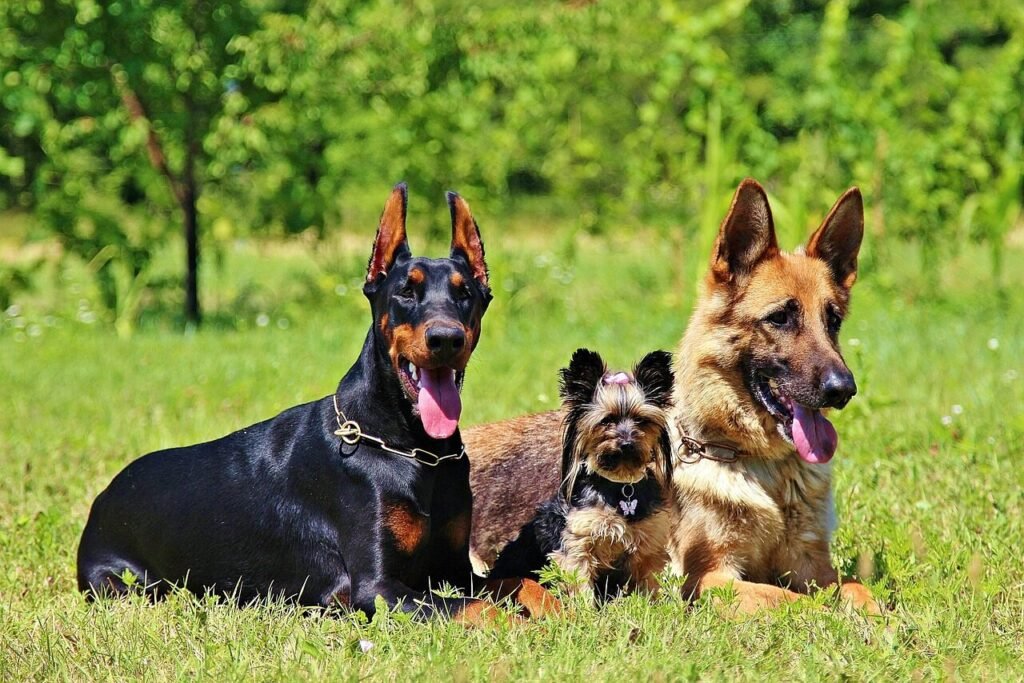
Families seeking a highly sociable and easygoing pet often prefer Labradors, while families who value both companionship and protective awareness may choose German Shepherds.
Exercise and Energy Levels
Both breeds are energetic and require regular physical activity, but their needs differ slightly in nature.
German Shepherds require both physical exercise and mental stimulation. Long walks, training sessions, and interactive activities help maintain their physical and emotional health. They often perform best when given tasks or challenges that engage their intelligence.
Labradors also require regular exercise but are generally more adaptable. They enjoy outdoor play, swimming, and retrieving games. Their exercise needs are significant, but they may not require the same level of structured mental activity as German Shepherds.
Inadequate exercise in either breed can lead to behavioural problems such as restlessness or destructive habits.
Behaviour and Social Interaction
German Shepherds are naturally attentive and observant. They often monitor their surroundings and respond quickly to unfamiliar stimuli. This behaviour contributes to their reputation as effective guard dogs.
Labradors, in contrast, are typically more relaxed and socially open. They often approach unfamiliar people with curiosity rather than caution. This difference in social behaviour is one of the most noticeable distinctions between the breeds.
Neither temperament is inherently better; the ideal choice depends on the owner’s lifestyle and expectations.
German Shepherd vs Labrador Fight and Behaviour Reality (USA Perspective)
Searches related to German Shepherd vs Labrador fight or Labrador vs German Shepherd who will win are common, but they reflect misunderstandings about dog behaviour and responsible ownership. In reality, dogs should never be placed in confrontational situations, as such encounters are dangerous, unpredictable, and can lead to severe injury for both animals and people.
In the United States, animal welfare organizations consistently emphasize that dogs are companions rather than competitors. Proper training, early socialization, and supervision are considered essential for preventing aggressive incidents. Guidance from organizations such as the American Society for the Prevention of Cruelty to Animals explains that aggression in dogs is often influenced by fear, lack of training, or environmental stress, and that prevention and behaviour management are the most effective approaches to safety.
Responsible ownership practices recommended in the United States include structured training, controlled introductions to other animals, and maintaining safe environments where dogs are not exposed to unnecessary risk.
Health and Lifespan Considerations
Both German Shepherds and Labradors have similar average lifespans, typically ranging between ten and thirteen years when provided with proper care, nutrition, and veterinary attention.
German Shepherds may be prone to hip and elbow dysplasia, as well as certain spinal conditions such as degenerative myelopathy. Regular veterinary checkups, responsible breeding, and maintaining a healthy weight can reduce the risk or severity of these conditions.
Labradors are also susceptible to hip dysplasia and are particularly prone to obesity if their calorie intake is not balanced with adequate exercise. Maintaining a structured feeding routine and regular physical activity is important to prevent long-term health complications such as joint stress and cardiovascular issues.
In the United States, guidance from veterinary and public health organizations highlights the importance of vaccination, parasite prevention, proper nutrition, and regular health screening to maintain canine health and welfare. The American Veterinary Medical Association provides comprehensive recommendations for responsible pet care and preventive health practices.
These health considerations apply equally to both breeds, and prospective owners should factor long-term veterinary care, diet, and exercise into their decision when choosing between a German Shepherd and a Labrador.
Grooming and Maintenance
German Shepherds have a dense double coat and shed heavily, particularly during seasonal changes. Regular brushing is necessary to maintain coat health and reduce loose hair in the home.

Labradors also shed but have shorter coats that are generally easier to manage. Weekly brushing is usually sufficient to control shedding and maintain coat condition.
Both breeds benefit from routine grooming, nail trimming, and dental care.
German Shepherd vs Labrador vs Golden Retriever
Another comparison frequently considered is German Shepherd vs Labrador vs Golden Retriever. Golden Retrievers share many characteristics with Labradors, including friendliness and patience, but often require more grooming due to their longer coats.
German Shepherds stand out in this comparison for their guarding instincts and working ability, while Labradors and Golden Retrievers are often preferred for therapy work and family companionship.
Living Environment and Adaptability
Labradors generally adapt well to a wide range of living environments, provided they receive sufficient exercise. They are often comfortable in suburban homes and can adjust to smaller living spaces if their activity needs are met.
German Shepherds often perform best in environments where they have space and structured activity. They thrive when they are mentally engaged and included in daily routines.
Both breeds require regular outdoor activity and should not be left inactive for extended periods.
Emotional Bond and Loyalty
German Shepherds are known for forming intense bonds with their owners and may become particularly attached to one or two primary handlers. This strong bonding contributes to their reputation for loyalty and protectiveness.
Labradors also form strong bonds but tend to distribute their affection more evenly among family members and visitors. Their sociable nature makes them highly adaptable in social environments.
Long-Term Cost and Responsibility
Owning either breed involves ongoing costs, including food, veterinary care, grooming, and training. German Shepherds may require additional training expenses if owners pursue advanced obedience or protection training.
Labradors may incur higher food costs due to their strong appetite and tendency toward weight gain if not carefully managed.
Responsible ownership includes planning for these long-term commitments.
Choosing the Right Breed for Your Lifestyle
Choosing between these breeds ultimately depends on lifestyle, environment, and personal expectations.
A German Shepherd may be the better choice for individuals seeking a protective, highly trainable, and alert companion who thrives on structured activity.

A Labrador may be ideal for families who want a friendly, adaptable, and easygoing dog that integrates easily into social environments.
Both breeds can become loyal and devoted companions when given proper care and attention.
Conclusion
German Shepherd vs Labrador comparison shows that both breeds are intelligent, loyal, and capable companions, but they differ in temperament, guarding instinct, and lifestyle suitability. German Shepherds tend to be more protective, attentive, and task-oriented, making them well-suited for roles that require vigilance and structured training. Labradors are typically more sociable, adaptable, and relaxed, which makes them one of the best choices for families and therapy work. Ultimately, the best breed depends on the owner’s living environment, activity level, and expectations. With responsible ownership, consistent training, and proper care, both German Shepherds and Labradors can become devoted companions and valued members of the family.
FAQ
• Which breed is better in a German Shepherd vs Labrador comparison?
Neither breed is universally better. German Shepherds are often preferred for protection, guarding, and structured training, while Labradors are usually chosen for their friendly temperament, adaptability, and suitability for family life.
• Labrador vs German Shepherd intelligence: which one is smarter?
Both breeds are highly intelligent. German Shepherds often excel in problem-solving and complex task training, while Labradors are known for cooperative intelligence and strong responsiveness to positive reinforcement.
• German Shepherd vs Labrador size: which dog is bigger?
German Shepherds are usually slightly taller and leaner, while Labradors are often heavier with a broader body. The difference in overall size is noticeable but not extreme.
• Labrador or German Shepherd for family: which is better?
Labradors are often easier for families because of their friendly and tolerant nature. German Shepherds can also be excellent family dogs, but they require early training and socialization due to their protective instincts.
• Is a German Shepherd more protective than a Labrador?
Yes, in most cases German Shepherds have stronger guarding instincts. Labradors are generally more sociable and less territorial.
• Labrador vs German Shepherd who will win in a fight?
This type of comparison is not meaningful because outcomes depend on many factors, and responsible dog ownership avoids situations where dogs fight. Both breeds should be trained and socialized to prevent aggression.
• Are Labradors easier to train than German Shepherds?
Labradors are often easier for beginners because of their relaxed and cooperative temperament. German Shepherds are highly trainable but usually benefit from structured training and mental challenges.
• German Shepherd vs Labrador vs Golden Retriever: which is best?
Golden Retrievers and Labradors are usually better suited for highly social family environments, while German Shepherds are often chosen for guarding ability and working roles.
• Do German Shepherds require more exercise than Labradors?
German Shepherds often require both physical exercise and mental stimulation, while Labradors need regular physical activity but may be slightly less demanding in structured tasks.
• Which breed is better for first-time dog owners?
Labradors are often recommended for first-time owners because of their friendly nature and adaptability. German Shepherds can also be suitable but usually require more consistent training and engagement.
• Labrador vs German Shepherd Who Will Win
Many people search Labrador vs German Shepherd who will win, but this question is based on a misunderstanding. Dogs should never be placed in fighting situations, and outcomes depend on temperament, training, health, and environment. Responsible ownership focuses on training, socialization, and prevention of aggressive encounters rather than competition.
German Shepherd vs Labrador Fight Reality
Searches for German Shepherd vs Labrador fight are common online, but in practice such situations are unpredictable and dangerous. Both breeds are companions first, and proper training and supervision help prevent conflict.


