Bringing home a Golden Retriever puppy is one of the happiest moments for any dog owner. However, the excitement often turns into exhaustion when your puppy struggles to settle at night. If you are searching for how to calm a golden retriever puppy at night at home, you are not alone. Golden Retrievers are affectionate, highly social dogs that form strong bonds with their humans. Because of this deep attachment, nighttime separation can feel overwhelming for a young puppy adjusting to a new environment.
Golden Retriever puppies do not cry at night to be difficult. In most cases, they are responding to anxiety, unmet biological needs, unfamiliar surroundings, or lack of routine. Understanding the emotional and developmental reasons behind night restlessness allows you to respond calmly and effectively rather than out of frustration.
According to the American Kennel Club, Golden Retrievers are friendly, intelligent, and deeply devoted family dogs, traits that make them wonderful companions but also more sensitive during transitions . When you approach nighttime training with structure and empathy, peaceful sleep becomes achievable.
Below is a thorough, structured guide to help you build consistent sleep habits and long-term emotional security for your puppy.
Understanding Why Golden Retriever Puppies Struggle at Night
The first step in solving nighttime crying is understanding its root cause. Puppies are biologically and emotionally immature. At eight weeks old, your Golden Retriever has just left their mother and littermates. Previously, they slept in a warm pile surrounded by constant contact and heartbeat rhythms. Suddenly, they are alone in a new home filled with unfamiliar smells and sounds.

Separation distress is extremely common during this adjustment period. Golden Retrievers, being highly people-oriented, often struggle more intensely than independent breeds.
Bladder capacity is another key factor. Young puppies can typically hold their bladder only for short periods. Expecting an eight-week-old puppy to sleep eight uninterrupted hours is unrealistic. The RSPCA notes that young puppies require frequent toilet breaks and patient house training during early development .
Overstimulation can also interfere with sleep. Intense play immediately before bedtime increases adrenaline levels, making it harder for your puppy to relax. On the other hand, insufficient daytime exercise may result in pent-up energy released at night.
When you understand these biological and emotional foundations, managing how to calm a golden retriever puppy at night at home becomes more strategic and less stressful.
Establishing a Predictable Night Routine
Routine is the single most powerful calming tool for puppies. Dogs thrive on predictability. When bedtime follows the same sequence each evening, your puppy begins to associate those steps with safety and rest.
Start your wind-down period about one hour before bedtime. Avoid rough play during this time. Instead, choose calm activities such as light training practice, gentle brushing, or quiet bonding. This signals that stimulation is ending.
Feed dinner at least two to three hours before bed. A full stomach too close to sleep can cause discomfort or increase elimination needs. After dinner, provide moderate exercise earlier in the evening rather than immediately before bedtime.
The final toilet break should happen just before sleep. Keep it calm and brief. Avoid turning it into playtime. Soft voice, minimal lighting, and quiet movement reinforce nighttime expectations.
Consistency matters more than perfection. Repeating this sequence nightly teaches your puppy’s internal clock to align with your schedule. Over time, sleep onset becomes faster and more reliable.
Creating the Ideal Sleeping Environment
Your puppy’s sleep space should feel secure, comfortable, and minimally stimulating. Whether you use a crate, playpen, or designated bed area, the space must communicate safety.
If using a crate, ensure proper sizing. Your puppy should be able to stand, turn, and lie down comfortably. Too much space may encourage toileting inside the crate. Many puppies feel calmer when part of the crate is covered with a breathable blanket, creating a den-like atmosphere. Always ensure proper airflow.
Bedding should be soft and washable. Adding a blanket carrying your scent can provide reassurance. Some owners find that heartbeat-simulation toys help replicate littermate comfort.
Temperature control is essential. Avoid cold drafts or excessive heat. Dim lighting is preferable to complete darkness during early adjustment. Soft background noise can mask sudden sounds that might trigger alertness.
A thoughtfully designed sleep area significantly supports success when learning how to calm a golden retriever puppy at night at home.
Meeting Physical Needs Before Bed
A calm night always begins with a well-managed day. Golden Retrievers are an energetic, working breed developed for retrieving game over long distances. Even as puppies, they possess natural stamina, curiosity, and a strong desire to engage with their environment. If these needs are not properly met during the day, that excess energy often appears at night in the form of restlessness, barking, pacing, or crying.
Age-appropriate physical activity is essential. For very young puppies, exercise should be structured into multiple short sessions spread throughout the day rather than one prolonged period. Short bursts of gentle play such as soft fetch, light tug games, or supervised exploration of the backyard help burn energy safely without overexertion. Overexercising a young puppy can actually lead to overtiredness, which paradoxically makes settling more difficult. Just like overtired children, overtired puppies can become hyperactive and unsettled.
Timing of activity matters significantly. Avoid intense play within the hour before bedtime. High-energy games increase adrenaline and cortisol levels, stimulating the nervous system and delaying relaxation. Instead, shift toward calming activities as bedtime approaches. Slow walks, gentle brushing, or quiet interaction help transition your puppy’s body into a relaxed state.
Mental stimulation is just as important as physical exercise. Golden Retrievers are highly intelligent dogs that require cognitive engagement. Training sessions that reinforce simple commands such as sit, down, or stay activate mental focus and create productive fatigue. Puzzle feeders, snuffle mats, or scent games encourage problem-solving and concentration. When a puppy’s brain has been properly stimulated during the day, they are far more likely to fall into deeper, more restorative sleep at night.
Teething can also disrupt sleep, particularly between four and six months of age. Gum discomfort may cause your puppy to wake repeatedly or whine during the night. Offering safe, veterinarian-approved chew toys in the evening can relieve irritation and promote self-soothing behaviour. Chilled rubber chew toys are especially effective for easing inflammation.
Hydration management requires balance. Water should never be removed for extended periods, as puppies need consistent hydration. However, slightly reducing water intake about an hour before bedtime can help minimise the likelihood of overnight accidents. Always ensure your puppy has had a final toilet break immediately before settling.
When physical exercise, mental stimulation, teething comfort, and toileting needs are consistently addressed, your Golden Retriever puppy’s body is naturally prepared for rest. A well-fulfilled puppy is calmer, more secure, and significantly easier to settle at night.
How to Get a Puppy to Sleep at Night Without Crying
Night crying during the first week or two is entirely normal. Your puppy has experienced a major life transition. They have left their mother, siblings, and familiar surroundings. Crying is often an expression of uncertainty rather than misbehaviour. The goal is not to eliminate crying instantly but to respond in a way that promotes security without creating dependency.

When your puppy begins to whine, avoid reacting immediately. Pause for several seconds and observe the intensity of the sound. Light fussing often fades on its own as the puppy adjusts. Immediate intervention at every small sound can unintentionally reinforce the behaviour.
If crying continues or escalates, calmly approach without switching on bright lights or engaging in playful interaction. Speak softly and assess whether your puppy needs a toilet break. Keep the outing quiet and businesslike. Do not play or cuddle excessively during this time. The message should be clear that nighttime is for sleeping, not socialising.
It is important not to ignore genuine distress. Prolonged, panicked crying may indicate anxiety, discomfort, or an urgent need to eliminate. Respond with reassurance while maintaining a calm, low-energy tone.
Daytime independence training greatly influences nighttime success. Practice short separations during the day. Leave the room briefly and return once your puppy remains calm. Reward relaxed behaviour with praise or small treats. This builds confidence and reduces fear of separation at night.
Consistency is crucial. If one night you allow your puppy into your bed and the next night you enforce strict separation, confusion develops. Clear, steady boundaries provide emotional stability.
Over time, your puppy learns that nighttime is predictable and safe. As their confidence grows, crying episodes become shorter and eventually disappear.
How to Make a Puppy Sleep Instantly
No training method can force a puppy into instant sleep, but you can significantly reduce settling time through structured calming techniques. The key lies in conditioning relaxation cues and minimising stimulation before bedtime.
Begin by establishing a consistent verbal cue such as “bedtime” or “sleep time,” spoken softly each evening as you guide your puppy to their sleeping area. Repetition creates association. Over several weeks, your puppy will begin linking that phrase with the expectation of rest.
Physical relaxation techniques can also be effective. Gentle stroking along the shoulders and back reduces muscle tension. Many puppies respond positively to slow, rhythmic touch. Keep movements deliberate and calm rather than playful.
Your own behaviour matters more than you may realise. Puppies are highly attuned to human emotional states. If you are anxious or frustrated, they may sense that tension. Slow your breathing intentionally and maintain a relaxed posture. Often, puppies mirror the calm energy around them.
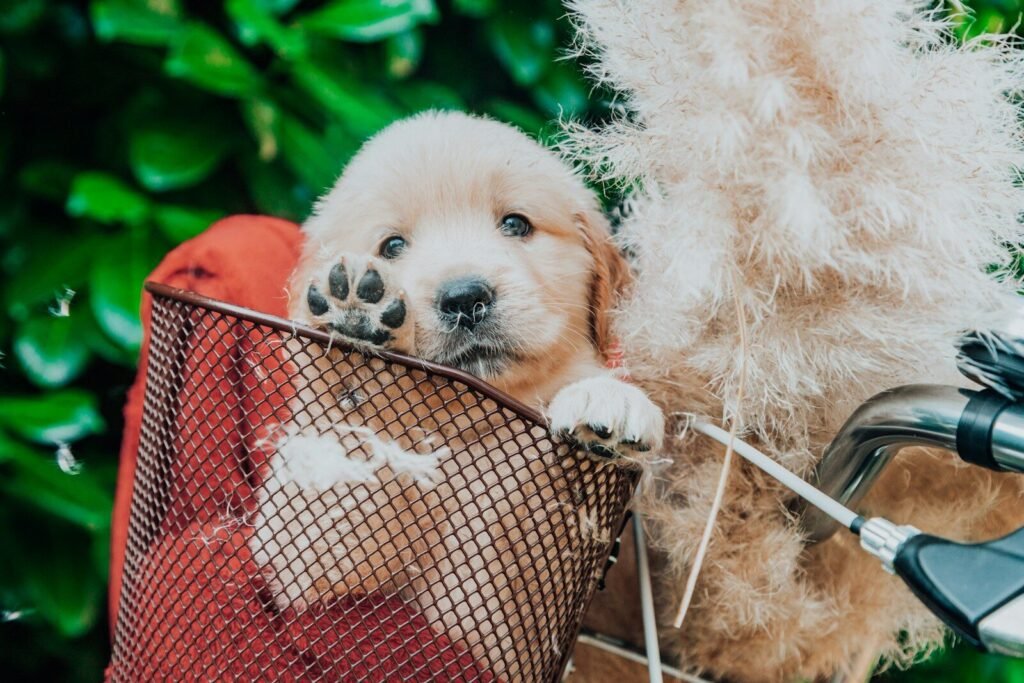
Environmental cues should support sleep. Keep lighting dim and noise minimal. Remove stimulating toys from the sleep area. If you provide a chew item for comfort, choose one that encourages quiet gnawing rather than active play.
White noise machines or low-volume ambient sound can create a consistent auditory background that masks sudden disturbances. This is particularly helpful in homes with unpredictable external noise.
The objective is not to rush sleep but to make the transition into rest smooth and predictable. Over time, your puppy’s body will respond more quickly to these consistent signals.
How to Get a Puppy to Sleep Through the Night Without a Crate
While crates are widely used for training, they are not the only option. Puppies can successfully sleep through the night without a crate when boundaries and routine remain consistent.
Create a clearly defined sleep zone using baby gates, a playpen, or a small enclosed section of a room. The area should be large enough for comfort but small enough to discourage wandering. Too much space may encourage pacing or exploratory behaviour.
Place bedding in one consistent location within this area. Avoid rearranging the layout frequently, as stability enhances security. Keep the sleep space away from high-traffic areas of the house to reduce distraction.
Toilet access remains essential, especially for young puppies. If your puppy cannot yet hold their bladder all night, you may need to wake briefly for a scheduled toilet break. Keep the process calm and brief.
Maintain the same bedtime routine described earlier. The absence of a crate does not eliminate the need for structure. In fact, routine becomes even more important when physical boundaries are less restrictive.
Many puppies adapt well to crate-free sleeping once house training progresses. The success of this approach depends less on the physical tool and more on consistency, calm leadership, and clear expectations.
6 Month Old Puppy Not Sleeping Through the Night
By six months of age, most Golden Retrievers have developed sufficient bladder control to sleep six to eight hours uninterrupted. If night waking continues beyond this stage, it is important to evaluate underlying causes.
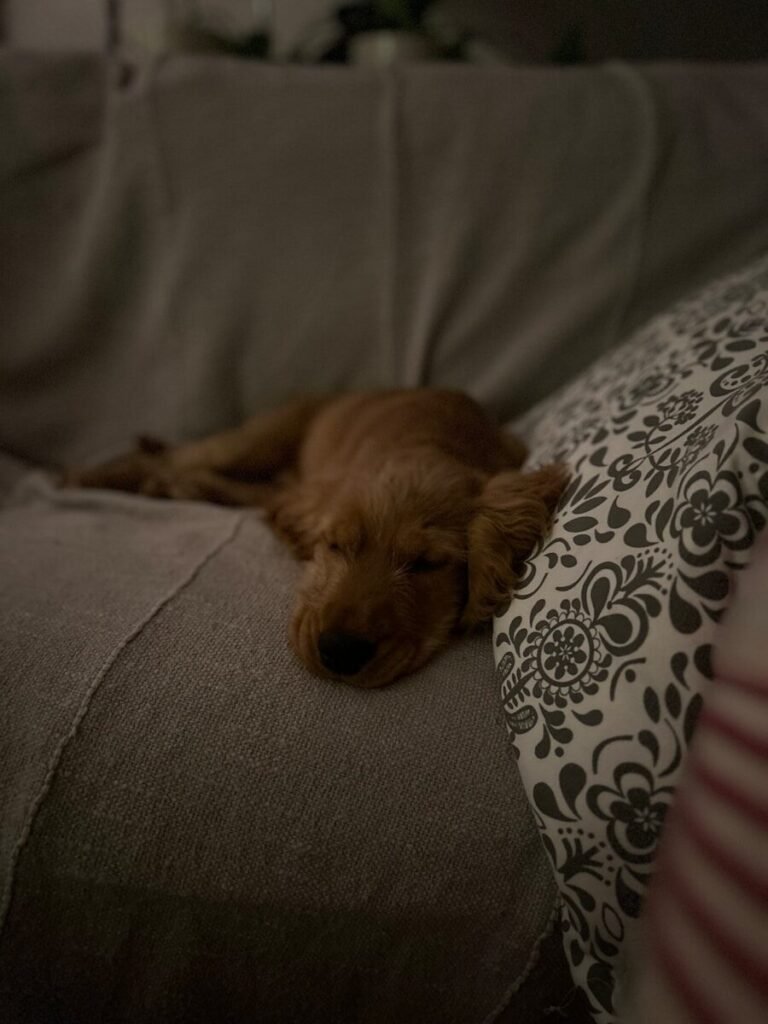
First, review daytime exercise levels. At six months, energy requirements increase significantly. Insufficient activity may lead to nighttime restlessness. Incorporate structured walks, controlled fetch sessions, and training exercises during the day.
Adolescence can also trigger temporary regression. Hormonal changes increase curiosity and alertness. Your puppy may become more sensitive to environmental sounds or external stimuli at night.
Avoid introducing new habits such as late-night play or excessive comforting, as these can prolong the pattern. Instead, reinforce established routines consistently.
If sleep disturbances are severe or accompanied by other behavioural changes, consulting a veterinarian may help rule out medical issues such as digestive discomfort or anxiety-related conditions.
Puppy Sleep Chart by Age
Understanding age-based sleep expectations prevents frustration. Puppies require significantly more sleep than adult dogs because growth and neurological development occur rapidly during early months.
Eight weeks old puppies often sleep 18 to 20 hours per day, broken into multiple short cycles. Nighttime sleep may include one or two waking periods for toileting.
At three months, total sleep typically ranges between 16 and 18 hours daily. Longer nighttime stretches begin to emerge, though occasional waking remains normal.
By six months, total daily sleep decreases to approximately 14 to 16 hours. Nighttime sleep becomes more consolidated.
Adult Golden Retrievers usually sleep between 12 and 14 hours daily, depending on activity levels.
Recognising these developmental stages ensures you maintain realistic expectations.
8 Week Old Puppy Sleeping Through the Night
An eight-week-old puppy sleeping uninterrupted for eight hours is uncommon. Most require at least one scheduled toilet break. Expecting full-night sleep too early often leads to disappointment.
Focus on gradual improvement rather than perfection. Celebrate small milestones such as longer stretches between waking episodes. Patience during this stage lays the foundation for stable sleep habits later.
8 Week Old Puppy Night Time Routine
A structured nighttime routine for an eight-week-old puppy should begin early in the evening. Engage in gentle play to release energy, followed by dinner several hours before bed.
Transition into calm bonding time such as light grooming or quiet interaction. Take your puppy outside for a final toilet break immediately before settling.
Guide them to their designated sleeping area using a soft verbal cue. Keep lighting low and noise minimal. Repetition each night builds security and predictability.
5 Month Old Puppy Stopped Sleeping Through the Night
Regression around five months often coincides with teething or developmental growth spurts. Increased chewing, mild discomfort, or routine changes may disrupt established sleep patterns.
Reassess daily stimulation levels and ensure consistent scheduling. Provide appropriate chew items to ease gum discomfort. Most regressions resolve naturally when structure is restored.
FAQ
How do I get my golden retriever puppy to sleep through the night?
Establish a consistent bedtime routine that includes a calm wind-down period, a final toilet break, and a quiet sleeping environment. Ensure your puppy receives sufficient physical exercise and mental stimulation during the day so they are naturally tired by night. Manage feeding and water timing to reduce overnight bathroom needs. If your puppy wakes, respond calmly and briefly without creating excitement, so you do not reinforce attention-seeking behaviour.
What is the 7 7 7 rule for puppies?
The 7 7 7 rule refers to important developmental milestones at seven days, seven weeks, and seven months of age. At seven days, early neurological development begins. At seven weeks, puppies are in a critical socialisation window. At seven months, adolescence emerges, often bringing behavioural testing and increased independence.
Does putting a blanket over a dog crate help?
For many puppies, partially covering a crate can create a den-like atmosphere that feels secure and comforting. It reduces visual stimulation and can promote relaxation. However, ventilation must remain adequate, and you should observe your puppy’s response to ensure they are comfortable rather than anxious.
Should you ignore a puppy crying at night?
Mild fussing may settle on its own, but persistent or distressed crying should not be ignored. Calmly assess whether your puppy needs a toilet break or reassurance. The key is to respond quietly and briefly without reinforcing crying as a way to gain attention or playtime.
What is the 3 second rule for puppies?
The 3 second rule emphasises that positive reinforcement should occur within three seconds of the desired behaviour. Immediate praise or reward strengthens the connection between the action and the outcome, making training more effective.
What is the hardest age for golden retrievers?
Adolescence, typically between six and eighteen months, is often the most challenging stage. During this period, hormonal changes, increased energy, and curiosity can lead to testing boundaries and temporary behavioural regression.
Why is my golden retriever puppy hyper at night?
Evening hyperactivity may result from insufficient daytime exercise, lack of mental stimulation, or overstimulation close to bedtime. An overtired puppy can also appear unusually energetic. Structured daytime activity and a calm evening wind-down routine usually help regulate behaviour.
Can golden retrievers sleep in air conditioning?
Yes, Golden Retrievers can sleep comfortably in air-conditioned rooms as long as the temperature is moderate and airflow is not blowing directly onto them. Avoid extreme cold and ensure they have warm bedding for comfort.
Should puppies sleep in complete darkness?
While some puppies adapt well to darkness, newly separated puppies may feel more secure with soft, dim lighting. A small night light can reduce anxiety during the early adjustment period.
How long does puppy night crying last?
With consistent routines and calm responses, most puppies significantly reduce night crying within one to three weeks. The duration depends on age, temperament, and how consistently boundaries are maintained.
Is it okay to sleep near my puppy initially?
Sleeping near your puppy during the first few nights can ease transition anxiety and build trust. However, gradual independence training should follow to prevent long-term dependency.
When will my golden retriever calm down?
Most Golden Retrievers begin to show noticeable emotional maturity between two and three years of age. While they may remain playful, their energy becomes more manageable as they reach adulthood.
Conclusion
Successfully learning how to calm a golden retriever puppy at night at home requires patience, structure, and empathy. Night crying is not defiance but communication during a period of adjustment and development. By meeting physical and emotional needs, maintaining consistent routines, and responding calmly to distress, you create lasting sleep stability. Over time, your Golden Retriever puppy will associate nighttime with safety and comfort, allowing both of you to enjoy peaceful, uninterrupted rest.


